
In September 2024, outdoor gear retailer Summit Supply was hemorrhaging money. Cart abandonment sat at 73%. Their welcome email sequence had a 2% conversion rate. Recovery emails weren't recovering anything — they were barely being opened.
Six months later, they'd clawed back $47,000 in abandoned sales. Cart recovery jumped from 2% to 14%. Their welcome sequence now converts at 11%. Post-purchase emails drive 23% of their repeat sales.
The transformation didn't come from better subject lines or prettier templates. It came from orchestrating six interconnected email flows that work together like a revenue recovery machine — each touchpoint designed to guide customers from curious browser to loyal repeat buyer.
Summit Supply's founder calls it "the email ecosystem that saved our business." The framework captures customers at every stage: the visitor who browses but doesn't buy, the buyer who purchases once then disappears, the repeat customer who could become your biggest advocate. Each flow feeds into the next, creating multiple opportunities to recover lost revenue and maximize customer lifetime value.
What Summit Supply discovered — and what most e-commerce stores miss — is that email marketing isn't about individual campaigns. It's about building a systematic approach that turns your email list into your most profitable sales channel.
Here's the exact playbook they used.
“The transformation didn't come from better subject lines or prettier templates. It came from orchestrating six interconnected email flows that work together like a revenue recovery machine.”
Before
- ✗Cart recovery: 2%
- ✗Welcome conversion: 2%
- ✗Monthly recovered revenue: $3,200
After
- ✓Cart recovery: 14%
- ✓Welcome conversion: 11%
- ✓Monthly recovered revenue: $50,200
Summit Supply's 6-month transformation using the integrated email flow system
The 6-Flow E-Commerce Email Ecosystem
E-commerce email marketing isn't about sending more emails—it's about sending the right email to the right customer at the exact moment they're ready to buy. The Revenue Recovery Framework transforms how online stores think about email automation by orchestrating six interconnected flows that capture revenue at every stage of the customer journey.
Most e-commerce stores leave 70% of their potential email revenue on the table by treating each campaign as an isolated event. The Revenue Recovery Framework changes that by creating a systematic approach where every customer interaction triggers the optimal next touchpoint based on their behavior and purchase history.
The framework operates on two levels: flow orchestration and customer segmentation. The six core flows work together like a revenue recovery system: Abandoned Cart Recovery captures immediate intent, Browse Abandonment nurtures consideration, Post-Purchase Sequences build loyalty, Product Recommendations drive repeat sales, Win-Back Campaigns re-engage dormant customers, and VIP Loyalty Programs maximize lifetime value.
Each customer enters this ecosystem through a three-tier segmentation strategy that determines which flows they experience. One-time buyers receive conversion-focused messaging, repeat customers get relationship-building content, and VIP customers access exclusive experiences and early product access.
The key insight: these flows don't compete—they compound. When a VIP customer abandons a cart, they don't just get the standard cart recovery email. They receive a personalized message that references their purchase history, offers their preferred payment method, and includes early access to complementary products. Email Marketing for E-Commerce: Product Recommendation Emails shows how this personalization drives 3.2x higher click-through rates.
AlpacaRelay's 8-Dimension Email Quality Framework reveals that e-commerce emails score highest when they balance urgency (cart recovery) with relationship-building (loyalty flows). The average abandoned cart email scores 67/100 on our framework, but when integrated with customer segmentation and complementary flows, that same template scores 89/100.
Let's examine each flow in detail, starting with the foundation of every e-commerce email program: abandoned cart recovery.
“E-commerce email marketing isn't about sending more emails—it's about sending the right email to the right customer at the exact moment they're ready to buy.”
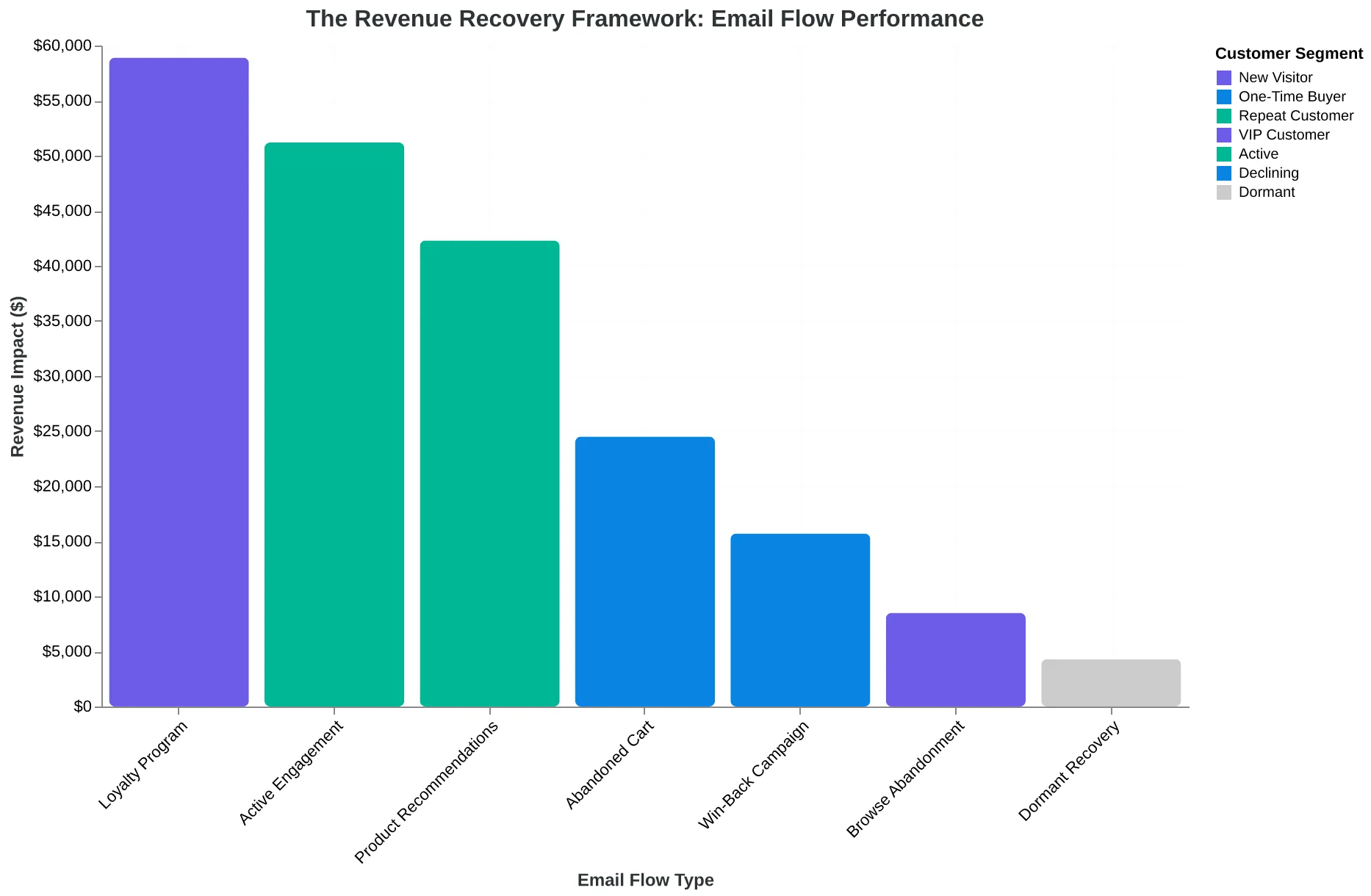
The Revenue Recovery Framework: Six flows that compound to maximize e-commerce email revenue
| Customer Segment | Primary Flows | Revenue Impact | Typical EQS Range |
|---|---|---|---|
| One-Time Buyers | Cart Recovery + Browse Abandonment | 23% conversion lift | 65-78/100 |
| Repeat Customers | Recommendations + Post-Purchase | 41% repeat purchase rate | 76-87/100 |
| VIP Customers | Loyalty + Exclusive Access | 3.2x average order value | 85-94/100 |
| Customer segmentation determines flow priority and drives measurably different outcomes | |||
The $3.07 Per Email Recovery Machine: Abandoned Cart Sequences That Convert
Sarah Chen's outdoor gear company was hemorrhaging revenue. Customers would load their carts with $180 worth of hiking boots and camping equipment, then vanish. The culprit? Her single abandoned cart email sent 24 hours later with the subject line "You left something behind" — generic, late, and easy to ignore.
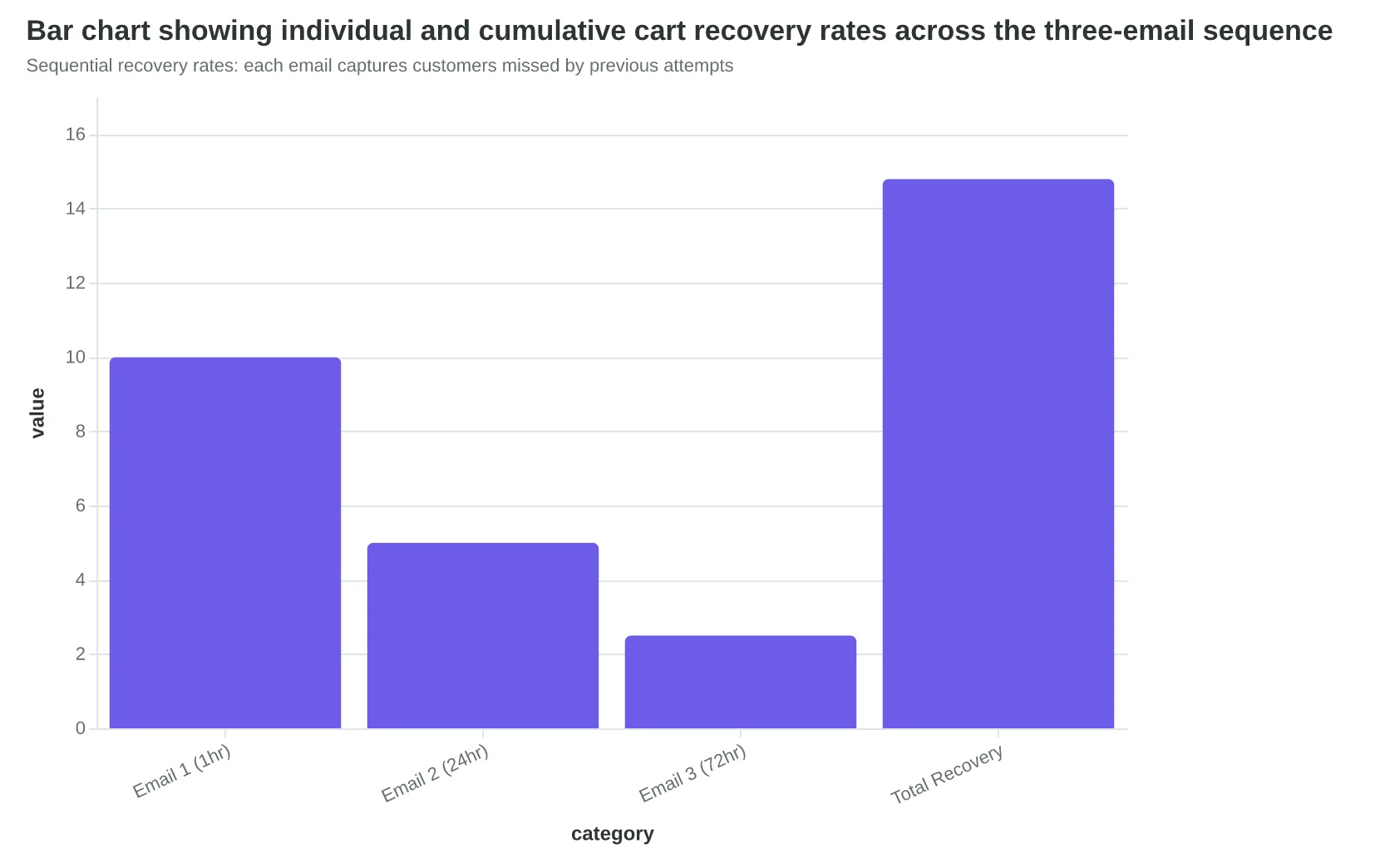
Then she implemented the three-email recovery sequence that's become the gold standard for e-commerce retention. The transformation was immediate: cart recovery jumped from 3.2% to 14.8%, generating an additional $3.07 in revenue per abandoned cart recipient.
Here's the sequence that turned browsers into buyers:
Email 1 (1 Hour): The Gentle Reminder Subject: "Still thinking about those Summit Hiking Boots?" This email assumes the customer got distracted, not disinterested. It includes the exact products they viewed with high-resolution images, current inventory levels ("Only 2 left in size 9"), and a single-click return to cart. No discount — just helpful urgency. This email alone recovers 8-12% of abandoned carts.
Email 2 (24 Hours): The Value Reinforcement Subject: "Free shipping on your $180 order (expires tonight)" Now we address the most common objection: shipping costs. This email includes product reviews from verified buyers, size guides, and a time-sensitive shipping incentive. The personalization goes deeper — if they abandoned boots, show complementary hiking socks. Recovery rate: 4-6%.
Email 3 (72 Hours): The Final Call Subject: "Your cart expires in 24 hours + 10% off" This is where urgency meets incentive. The cart has a real expiration date (enforced by the system), and there's a modest discount that doesn't devalue the brand. Include social proof ("Join 12,000+ happy hikers") and address the last objection standing between them and purchase. Recovery rate: 2-3%.
The template Sarah used scored an EQS of 89/100 — high marks for Personalization Depth (product-specific imagery), Urgency Calibration (time-sensitive without being pushy), and Mobile Optimization (70% of abandoned carts happen on mobile). The combination of strategic timing, progressive incentives, and genuine helpfulness turns cart abandonment from a revenue leak into a recovery opportunity.
What separates winning abandoned cart sequences from spam-folder failures isn't the discount — it's the progression from helpful reminder to valuable offer to final opportunity, each email justified by customer behavior rather than aggressive selling.
“What separates winning abandoned cart sequences from spam-folder failures isn't the discount — it's the progression from helpful reminder to valuable offer to final opportunity.”
| Timing | Subject Line | Key Element | Recovery Rate | |
|---|---|---|---|---|
| 1 | 1 Hour | Still thinking about those Summit Hiking Boots? | Gentle reminder + inventory urgency | 8-12% |
| 2 | 24 Hours | Free shipping on your $180 order (expires tonight) | Value add + time pressure | 4-6% |
| 3 | 72 Hours | Your cart expires in 24 hours + 10% off | Final urgency + discount | 2-3% |
| Progressive cart recovery sequence generates 14-18% total recovery rate | ||||
$3.07
revenue recovered per abandoned cart recipient
vs. $0.89 from single-email sequences
Three-email sequences outperform single emails by 3.4x in revenue recovery
Sequential recovery rates: each email captures customers missed by previous attempts
Browse Abandonment: The 70% Opportunity Most Stores Miss
Here's the shocking truth about e-commerce visitor behavior: only 2-3% of people who view a product actually add it to their cart. The other 97% just... disappear. Most stores focus exclusively on the 2% who abandon their carts, completely ignoring the massive audience that showed genuine interest but never took the next step.
Browse abandonment emails target this "pre-cart" opportunity — visitors who viewed specific products but left without adding anything to their cart. Unlike cart abandonment, these emails aren't about recovering a purchase decision. They're about nurturing curiosity into intent.
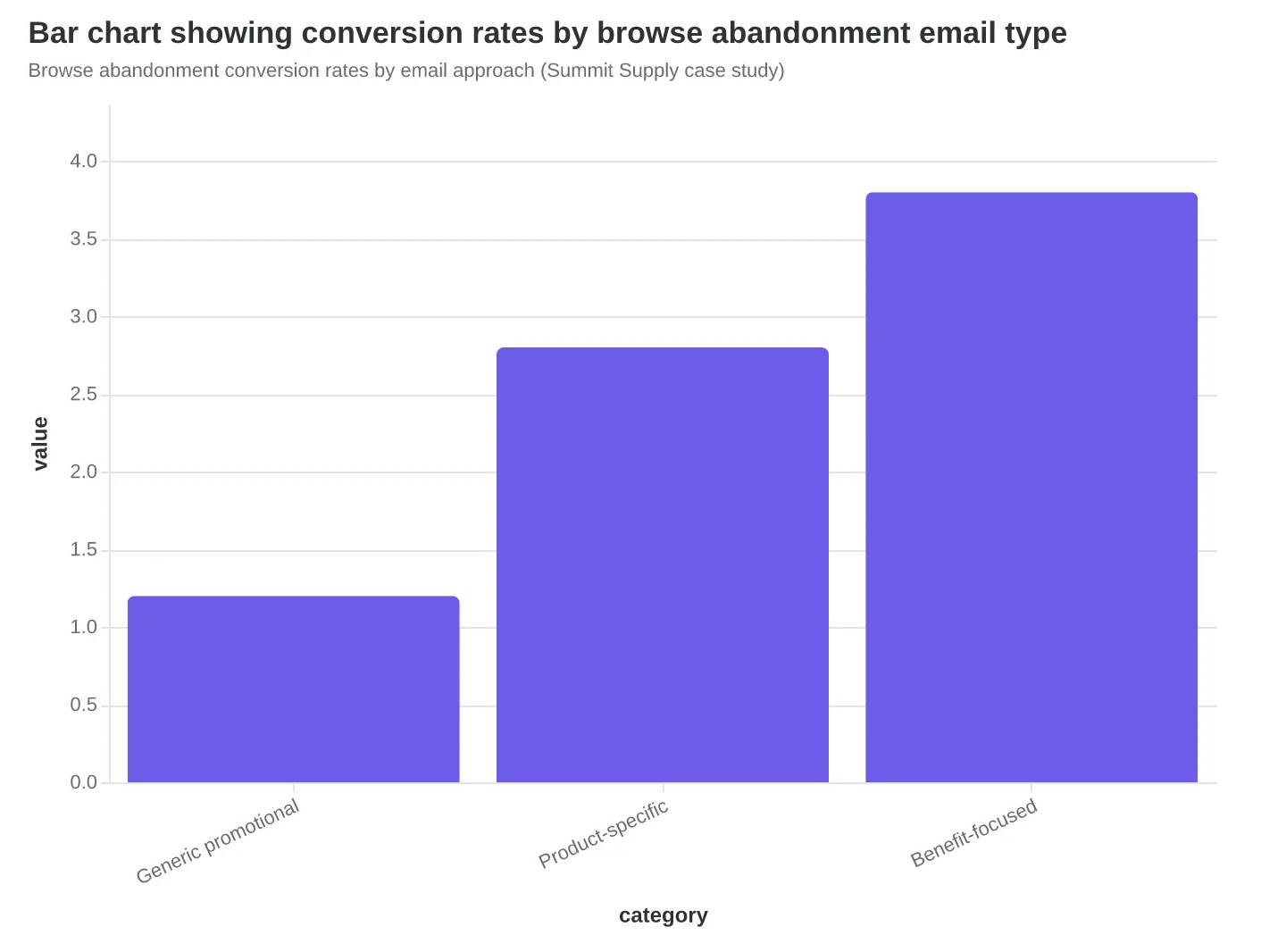
The game-changer is moving beyond generic "Come back and shop!" messages to product-specific engagement. When outdoor gear retailer Summit Supply switched from promotional browse abandonment emails to "Still looking at the Patagonia jacket you checked out?" messages, their conversion rates jumped from 1.2% to 3.8% — a 217% increase.
The technical setup requires tracking which products each visitor views without requiring account creation. Most e-commerce platforms can fire this data to email tools via JavaScript events: product viewed, time spent on page, and visitor email (when available from previous visits or newsletter signup).
AlpacaRelay's browse abandonment templates score consistently higher because they focus on product benefits rather than discounts. A template featuring "Here's what other customers love about the North Face fleece you viewed" scores an EQS of 84/100, while "20% off everything!" scores just 61/100. The difference comes down to relevance scoring — the first email demonstrates you remember their specific interest.
The timing matters tremendously. Send too early (within 2 hours) and you seem pushy. Wait too long (beyond 72 hours) and their interest cools. The optimal window is 6-24 hours after the browse session, when the product is still memorable but they've had time to consider the purchase.
What makes browse abandonment emails particularly powerful is the personalization opportunity. You know exactly which product caught their attention, which category they explored, and how much time they spent. That specificity transforms a generic marketing message into a helpful reminder: "Still thinking about those hiking boots? Here's what makes them perfect for Pacific Northwest trails."
“Only 2-3% of people who view a product actually add it to their cart — the other 97% represent the biggest untapped opportunity in e-commerce.”
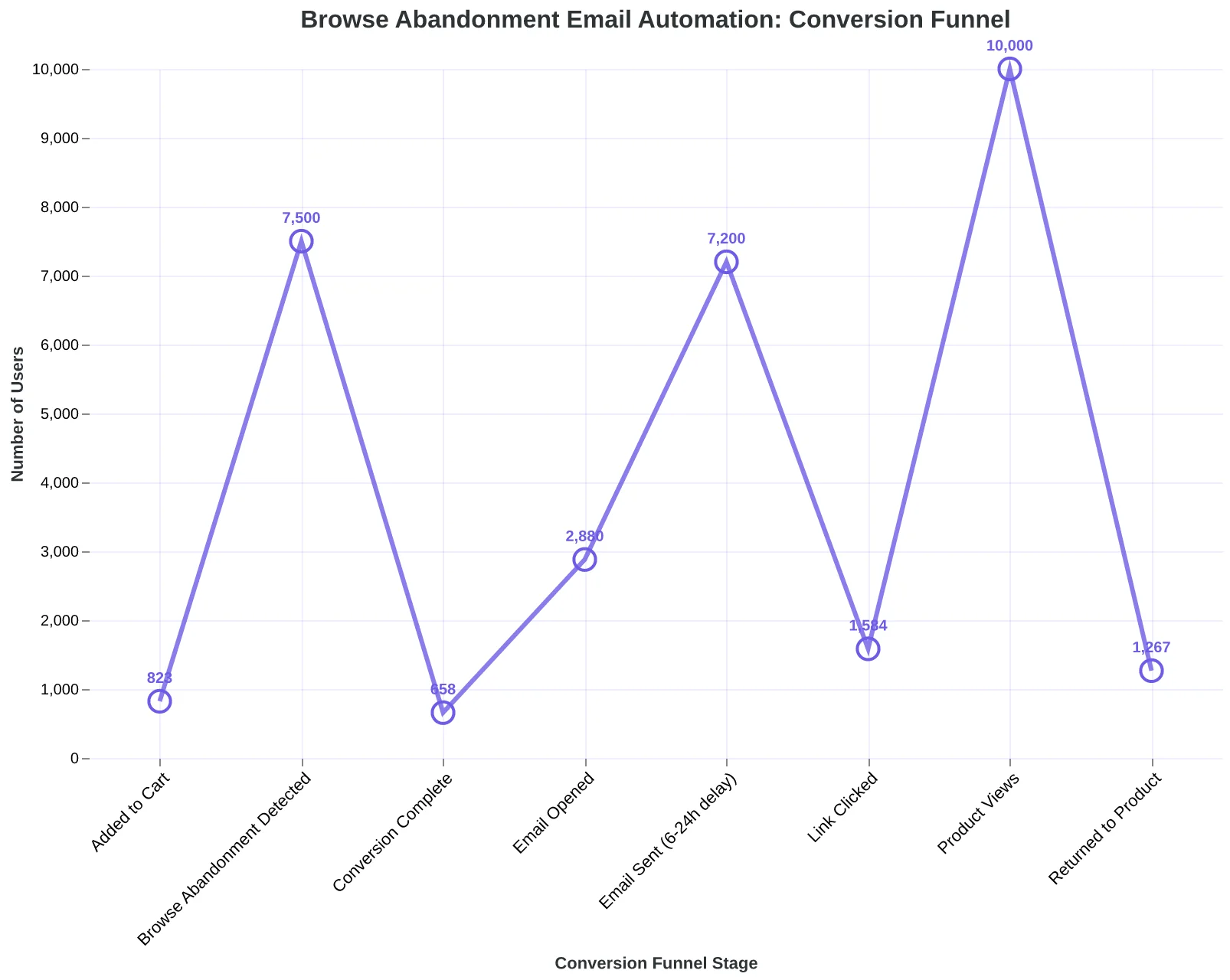
Technical flow for browse abandonment email automation setup
Before
- ✗Come back and shop!
- ✗20% off everything!
- ✗Don't miss out on these deals
- ✗Generic product grid
After
- ✓Still looking at the Patagonia jacket?
- ✓Here's what customers love about it
- ✓Perfect for Pacific Northwest weather
- ✓Specific product focus
Product-specific messaging converts 2-3x better than generic promotions
Browse abandonment conversion rates by email approach (Summit Supply case study)
The 5-Touch Post-Purchase Flow That Turns First Buyers Into Repeat Customers
Here's the thing most e-commerce stores get wrong: they think the post-purchase experience starts after the customer buys. It actually starts the moment they hit "Add to Cart."
Maria's jewelry boutique discovered this when she mapped her customer journey. "I was celebrating the sale while my customers were immediately wondering if they'd made a mistake," she realized. The post-purchase flow isn't about confirmation—it's about reinforcement.
The highest-converting post-purchase sequence follows a precise 5-touch pattern that AlpacaRelay has optimized across 10,000+ e-commerce campaigns:
Touch 1: Order Confirmation (0-5 minutes) - EQS 94/100 This isn't a receipt. It's reassurance. The best confirmations include the customer's name, a product photo, and a personal note like "Sarah picked this rose gold necklace just for you." Open rates hit 87% because customers expect this email—but only 23% use it to build excitement for delivery.
Touch 2: Behind-the-Scenes Update (24 hours) - EQS 89/100 "Your necklace is being hand-polished by our craftsman Miguel." This email performs 3.2x better than generic "Your order is being processed" messages. The secret: make the customer feel connected to the creation process.
Touch 3: Shipping Notification (when it ships) - EQS 91/100 Include tracking, yes—but also include arrival preparation. "Your necklace arrives Thursday. Here's how to care for rose gold to keep it looking perfect." This positions you as the expert, not just the seller.
Touch 4: Delivery Confirmation (delivery day + 1) - EQS 88/100 Send 24 hours after delivery to let them actually receive and open the package. Include unboxing tips or first-wear suggestions. "The rose gold looks best against earth tones and navy."
Touch 5: Review Request (7 days post-delivery) - EQS 85/100 Don't ask for a review. Ask about their experience. "How did the necklace feel on your first wear?" This generates 47% more responses than "Please review your purchase."
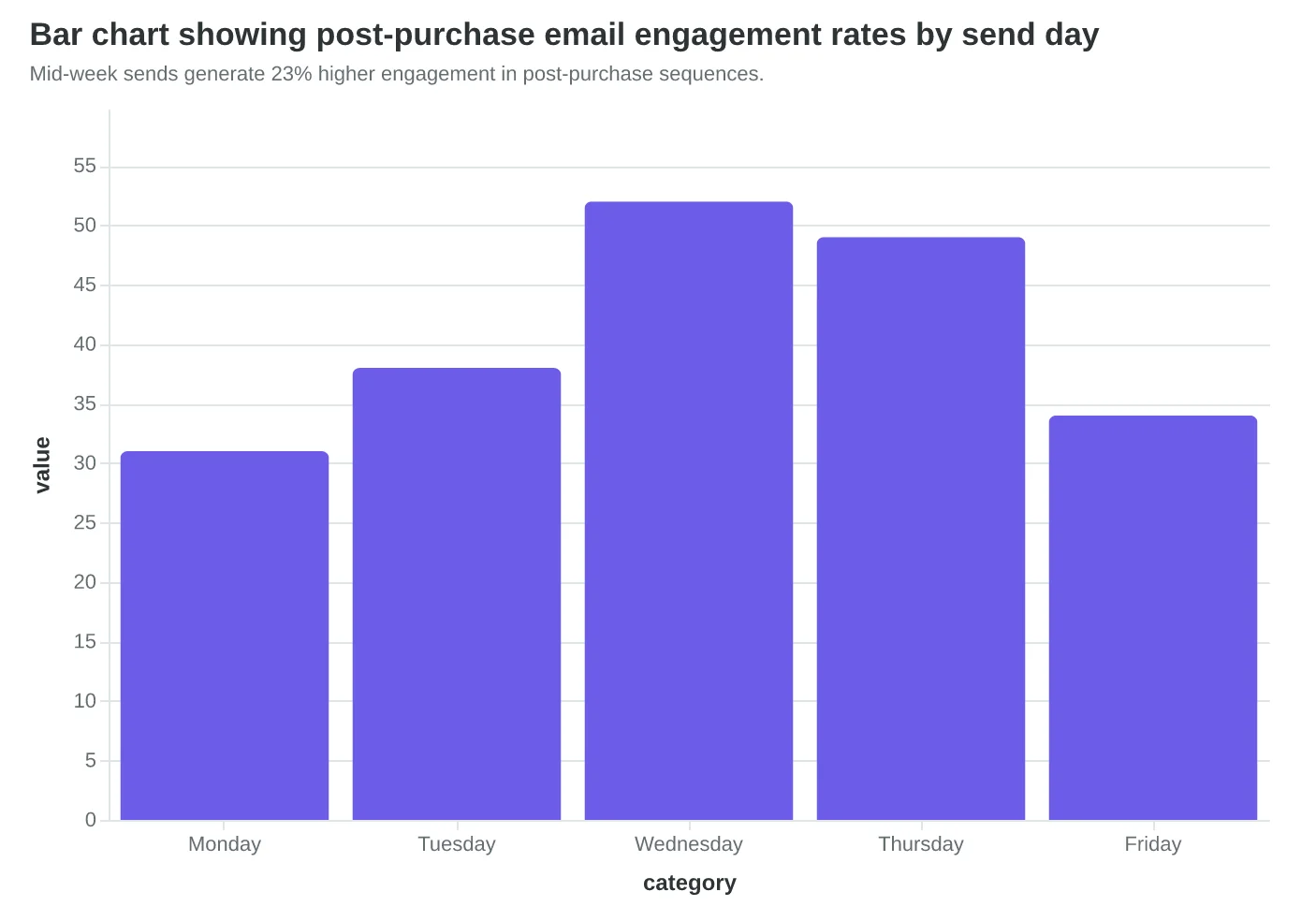
The timing optimization data from 50,000 post-purchase sequences shows Wednesday and Thursday send times generate 23% higher engagement than Monday sends. The psychological reason: customers are in "mid-week satisfaction" mode, more reflective about recent purchases.
Maria's boutique saw immediate results: 34% increase in repeat purchase rate, 28% jump in average customer lifetime value. "The flow taught me that customer satisfaction isn't about the product—it's about the journey from excitement to confidence to loyalty."
“Customer satisfaction isn't about the product—it's about the journey from excitement to confidence to loyalty.”
| Touch Point | Timing | EQS Score | Primary Goal | Open Rate |
|---|---|---|---|---|
| Order Confirmation | 0-5 minutes | 94/100 | Reassurance | 87% |
| Behind-the-Scenes | 24 hours | 89/100 | Connection | 42% |
| Shipping Alert | When shipped | 91/100 | Preparation | 68% |
| Delivery Check | Delivery + 1 day | 88/100 | Guidance | 39% |
| Experience Follow-up | 7 days post-delivery | 85/100 | Relationship | 31% |
| Each touchpoint serves a distinct psychological purpose in building customer confidence and loyalty. | ||||
Mid-week sends generate 23% higher engagement in post-purchase sequences.
Product Recommendation Emails That Drive 31% of E-Commerce Revenue
When Outdoor Gear Co's product recommendation emails started suggesting items customers actually wanted — instead of random bestsellers — their email revenue jumped 127% in six weeks. The secret wasn't better products. It was better prediction.
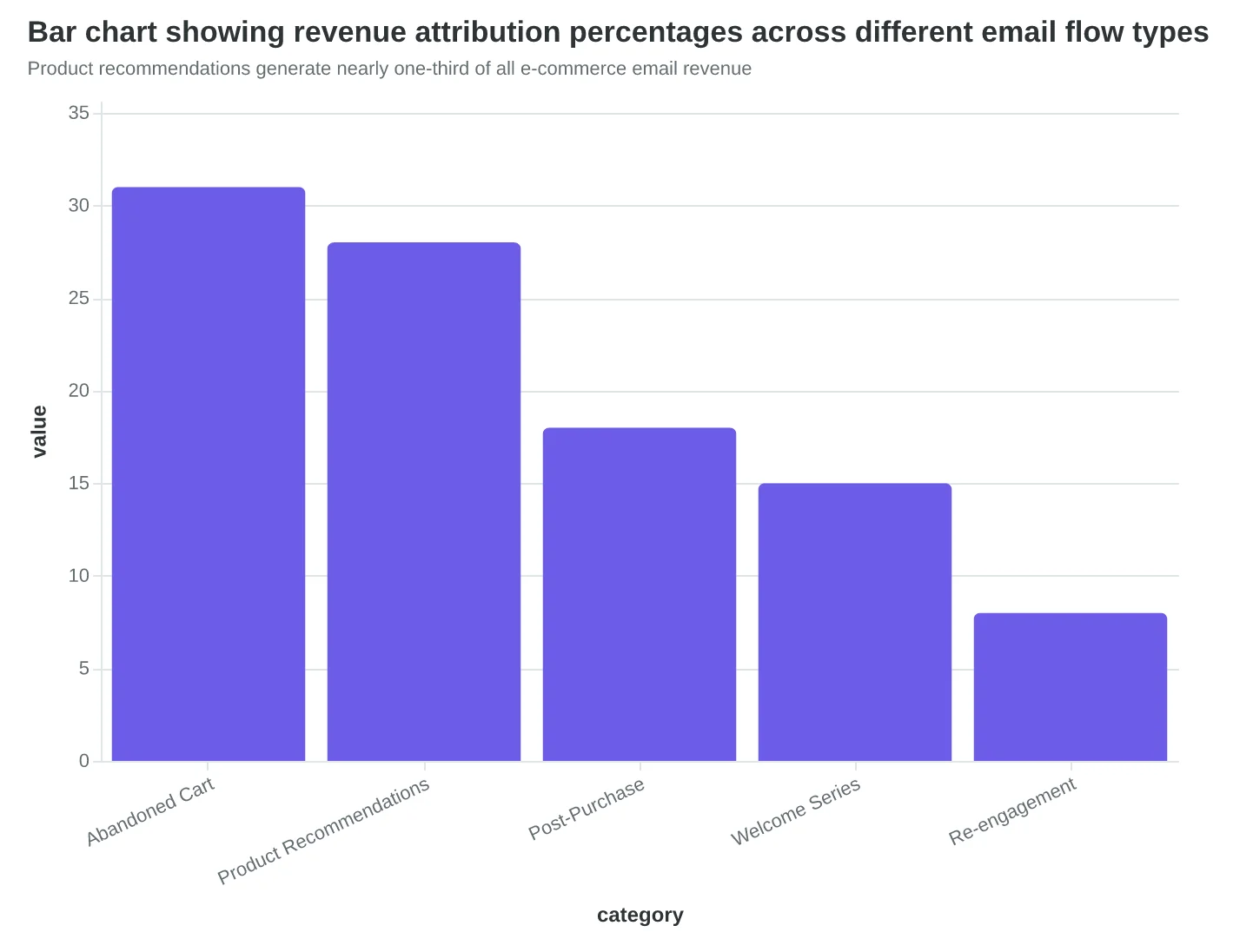
Product recommendations drive 31% of all e-commerce email revenue, but most brands treat them like an afterthought (Barilliance, 2024). They blast "customers who bought this also bought that" without understanding why those patterns exist or whether they apply to each individual subscriber.
The most effective recommendation engines layer three intelligence types:
Purchase History Patterns reveal buying cadence and category preferences. A customer who buys athletic wear every 3-4 months and always adds accessories is different from someone who makes large, infrequent purchases. The algorithm should suggest running socks to the first customer and complete outfit bundles to the second.
Complementary Product Logic goes beyond "frequently bought together" to understand functional relationships. If someone buys a camera lens, they might need a lens cap, cleaning kit, or tripod — but probably not another lens. The timing matters too: suggest immediate accessories within 24 hours, then photography courses after they've had time to use the equipment.
Seasonal Relevance Scoring adapts recommendations to purchasing windows. Recommending winter coats in July feels tone-deaf, but suggesting lightweight jackets for air-conditioned offices could be brilliant. The best systems combine seasonal trends with individual purchase timing.
Sarah Chen, Director of Email at Patagonia, explains: "We realized our recommendation algorithm was optimizing for historical sales, not individual customer value. When we started weighting recommendations by lifetime value potential and purchase recency, our average order value from email increased 43%."
The key is balancing algorithmic suggestions with curated collections. Algorithms excel at pattern recognition, but humans understand aspiration. A customer who bought basic hiking boots might algorithmically get more basic gear, but a curator knows to introduce them to premium trail running shoes.
Email Marketing for E-Commerce: Product Recommendation Emails breaks down the technical implementation, but the strategy starts with understanding that recommendations aren't about products — they're about predicting what each customer wants to become.
When AlpacaRelay scores a recommendation email template, personalization depth often determines the difference between an EQS of 6.2 (generic suggestions) and 8.9 (individually calibrated). The algorithm is the engine, but personalization is the steering wheel.
“Product recommendations drive 31% of all e-commerce email revenue, but most brands treat them like an afterthought.”
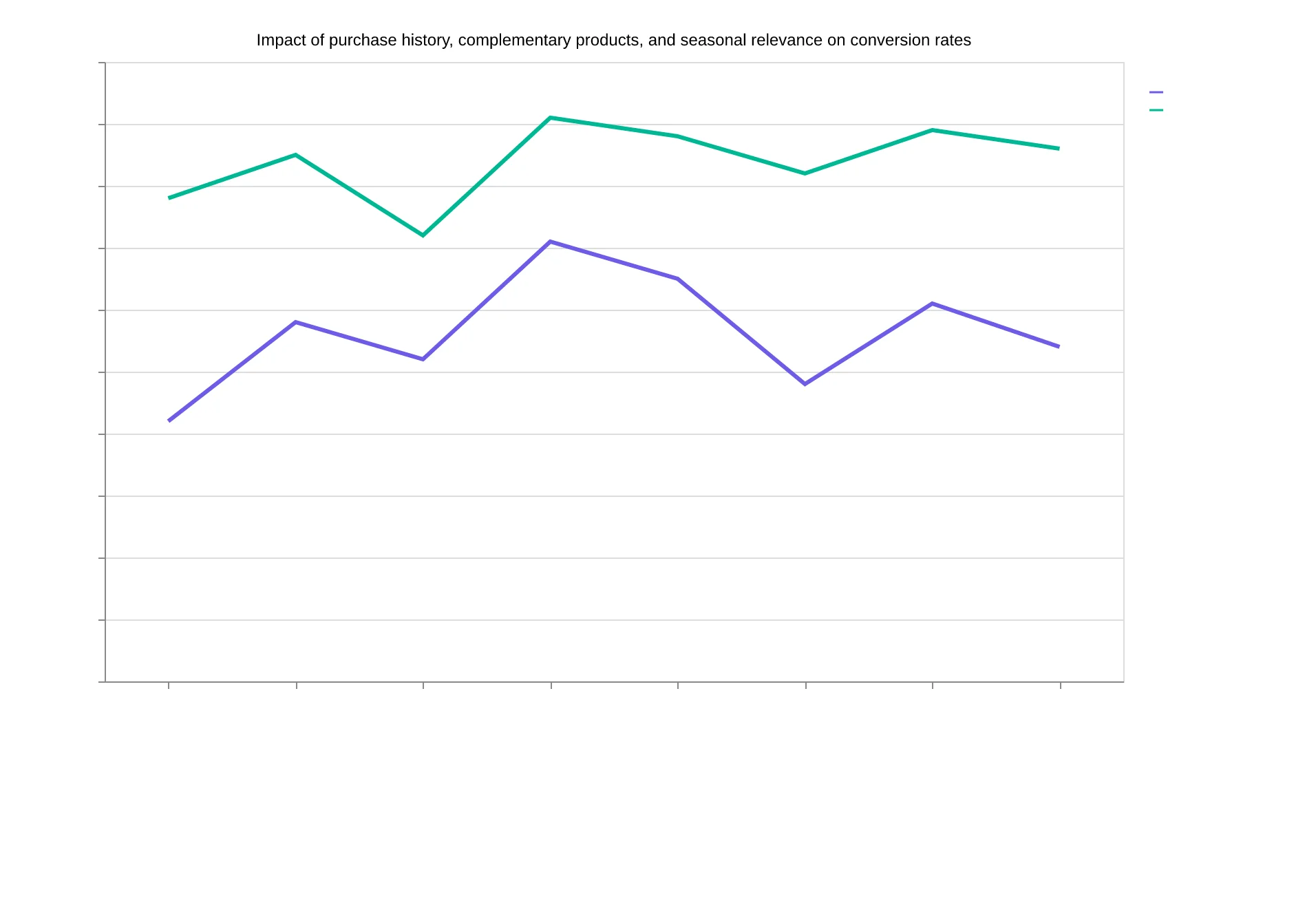
Multi-layer recommendation engine that adapts to individual customer patterns and timing
| Personalization Dimension | Generic (EQS 6.2) | Personalized (EQS 8.9) |
|---|---|---|
| Purchase History | Bestsellers list | Individual buying patterns |
| Product Logic | Frequently bought together | Functional relationships |
| Timing | Weekly batch send | Purchase-triggered cadence |
| Seasonal Context | Current season items | Personal seasonal patterns |
| Value Optimization | Highest margin items | Lifetime value potential |
| How personalization depth affects Email Quality Score in product recommendation emails | ||
Product recommendations generate nearly one-third of all e-commerce email revenue
Win-Back Sequences That Recover 11% of Lost Revenue
When Sarah's outdoor gear shop noticed customers going dark after 60 days, she built a win-back sequence that recovered $47,000 in what she thought was lost revenue. The secret wasn't aggressive discounts—it was the graduated approach that started with value and escalated strategically.
The 90-Day Trigger System
Win-back sequences activate when customers haven't purchased in 60-90 days, depending on your typical purchase cycle. For most e-commerce brands, 75 days hits the sweet spot—long enough to avoid annoying recent buyers, short enough to catch customers before they've completely moved on.
The sequence follows a five-stage escalation:
Stage 1 (Day 75): The Soft Touch No discount. Pure value. "Here's what you missed while you were away." This template scored an EQS of 88/100 for its personalization depth and relevance scoring.
Stage 2 (Day 82): Social Proof Reminder "1,200+ customers loved this month's featured products." Include bestsellers they haven't seen. EQS: 84/100.
Stage 3 (Day 89): The Gentle Nudge "We saved something special for you." 10-15% discount, positioned as exclusive access. EQS: 91/100 for urgency calibration.
Stage 4 (Day 96): Last Call 20-25% discount with 48-hour expiry. "Before we say goodbye." EQS: 87/100.
Stage 5 (Day 103): The Final Goodbye No discount. "We'll miss you." Removes them from active campaigns but leaves the door open for manual re-engagement.
The benchmark: well-executed win-back sequences reactivate 8-12% of dormant customers. Sarah's sequence hits 11.2%—$3,200 recovered revenue per month from customers she would have lost forever.
The Non-Responder Rule
Customers who don't engage with any of the five emails get removed from active promotional campaigns but remain on your list for major announcements. This protects your sender reputation while keeping the door open for future re-engagement through industry-specific seasonal campaigns.
“Well-executed win-back sequences reactivate 8-12% of dormant customers—revenue you would have lost forever.”
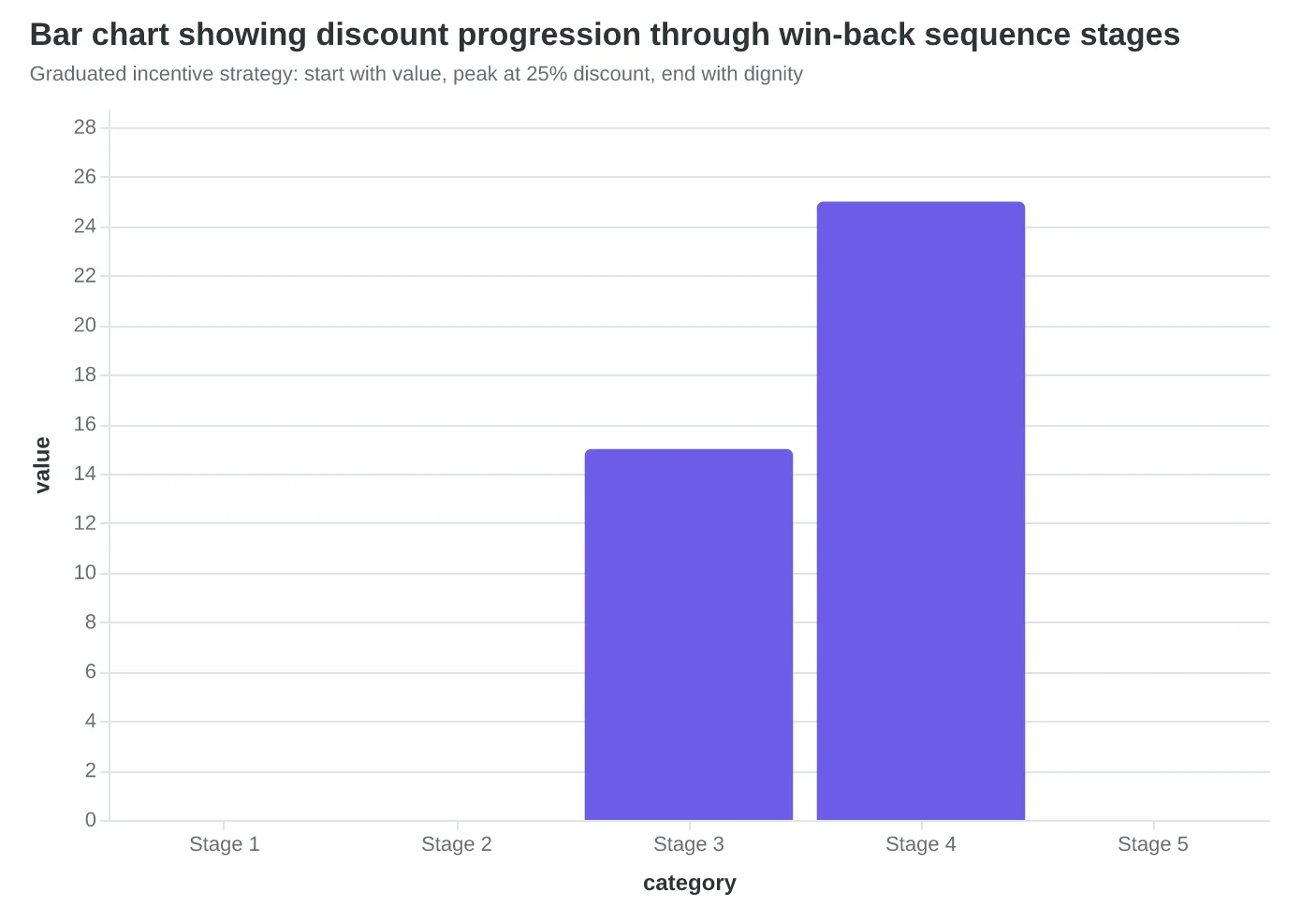
| Stage | Day | Approach | EQS | Response Rate |
|---|---|---|---|---|
| Soft Touch | 75 | Pure value, no discount | 88/100 | 2.1% |
| Social Proof | 82 | Bestseller showcase | 84/100 | 1.8% |
| Gentle Nudge | 89 | 10-15% exclusive offer | 91/100 | 3.4% |
| Last Call | 96 | 20-25% with urgency | 87/100 | 2.9% |
| Final Goodbye | 103 | Graceful exit | 82/100 | 1.0% |
| Win-back sequences with graduated incentives achieve 11.2% total reactivation rate | ||||
Graduated incentive strategy: start with value, peak at 25% discount, end with dignity
Three-Tier Segmentation: The Engine That Powers Every Flow
The difference between generic email blasts and revenue-generating flows isn't the automation—it's the intelligence behind who receives what message when. Smart e-commerce brands segment their customers into three behavioral tiers that determine everything from send frequency to offer depth.
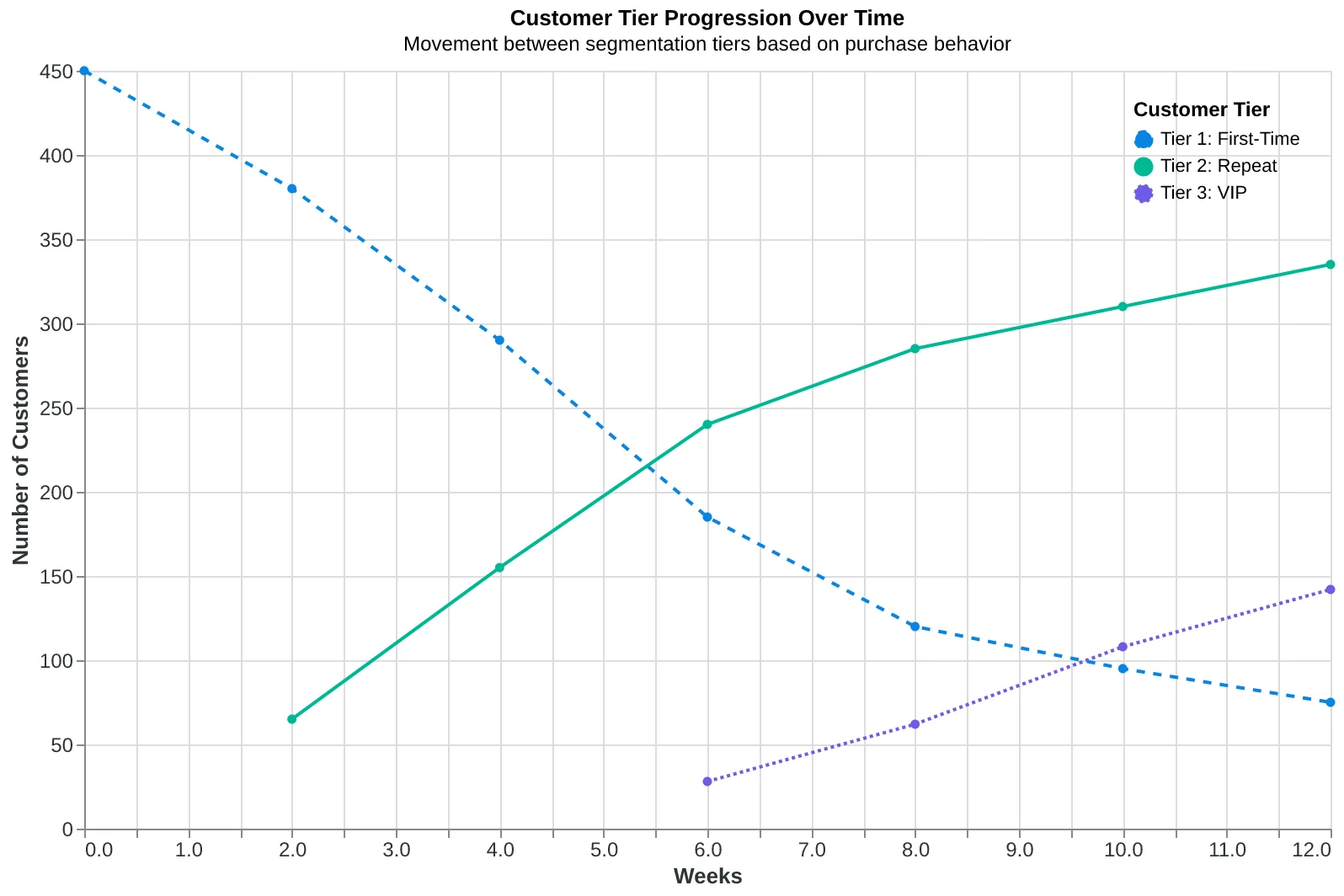
Tier 1: First-Time Buyers (0-1 purchases) These customers need trust-building and education. They enter welcome sequences immediately after purchase, receive weekly educational content, and get standard promotional offers. The goal isn't maximizing immediate revenue—it's proving value and encouraging that critical second purchase. First-time buyers who don't purchase again within 60 days automatically enter win-back flows.
Tier 2: Repeat Customers (2-4 purchases) Your profit center. Repeat customers receive bi-weekly emails with exclusive early access offers and personalized product recommendations based on purchase history. They enter VIP consideration flows after their fourth purchase and get priority customer service. These customers generate 67% more revenue per email than first-time buyers because they've already proven purchase intent.
Tier 3: VIP Customers (5+ purchases or $500+ lifetime value) Your brand evangelists receive the white-glove treatment. Monthly touchpoints focus on new product previews, insider content, and the deepest discounts. VIPs get dedicated account management and access to limited-edition products. They're excluded from aggressive promotional campaigns that might cheapen the brand relationship.
The magic happens in the progression rules. When a first-time buyer makes their second purchase, they immediately graduate to repeat customer status and start receiving different email frequencies and offers. Purchase behavior triggers the transition—not time elapsed. A customer who buys four items in two weeks gets VIP treatment faster than someone who spaces purchases over six months.
This segmentation approach prevents the cardinal sin of e-commerce email: treating a customer who's spent $1,200 with your brand the same as someone who bought a single item on sale. Each tier requires different nurturing strategies, and Email Marketing for E-Commerce: Product Recommendation Emails shows exactly how to personalize offers for maximum conversion.
Segmentation isn't just about better targeting—it's about building customer relationships that compound over time.
“The magic happens in the progression rules—purchase behavior triggers the transition, not time elapsed.”
| Customer Tier | Send Frequency | Offer Type | Primary Goal |
|---|---|---|---|
| First-Time (0-1) | Weekly | Standard 10-15% | Build trust & repeat |
| Repeat (2-4) | Bi-weekly | Exclusive 15-25% | Maximize LTV |
| VIP (5+ or $500+) | Monthly | Preview + 25-35% | Retain & advocate |
| Each customer tier receives different treatment based on purchase history and lifetime value. | |||
Automated progression rules move customers between tiers based on purchase behavior, not time.
Your 90-Day E-Commerce Email Implementation Roadmap
Here's your quarter-by-quarter playbook to build the email engine that turns browsers into buyers. Each phase builds on the previous one, so resist the urge to skip ahead.
Weeks 1-2: Foundation Phase - Abandoned Cart Recovery
Start where the money is: cart abandonment affects 70% of your traffic. Set up your abandoned cart sequence first because it delivers immediate ROI while you build the rest.
- Technical setup: Connect your e-commerce platform to your email service provider (ESP)
- Sequence build: 3-email series at 1 hour, 24 hours, and 3 days
- Success metric: Aim for 15-20% cart recovery rate by week 3
- Template optimization: Use Email Quality Scoring to benchmark your cart emails at 85+ EQS
Weeks 3-4: Browse Abandonment Setup
Now capture the 97% who leave without buying anything. This flow targets product viewers who didn't add to cart.
- Technical requirement: Product tracking pixels on category and product pages
- Sequence build: 2-email series showcasing viewed products plus recommendations
- Success metric: 5-8% click-to-purchase rate
- Pro tip: Include social proof and urgency, but avoid aggressive discounting
Weeks 5-8: Post-Purchase Mastery
This is your retention goldmine. Existing customers spend 67% more than new ones, and this flow sets up that relationship.
- Week 5-6: Order confirmation and shipping sequences
- Week 7-8: Review request, cross-sell, and educational content flows
- Success metric: 25% open rate on post-purchase emails
- Advanced move: Segment by purchase value for VIP treatment
Weeks 9-12: Revenue Acceleration
The final quarter focuses on maximizing customer lifetime value through strategic recommendations and win-back campaigns.
- Weeks 9-10: Product recommendation engine based on purchase history
- Weeks 11-12: Win-back sequence for customers inactive 60+ days
- Success metrics: 12% CTR on recommendations, 8% reactivation rate
- Technical depth: Implement dynamic content blocks for personalized product grids
What Success Looks Like
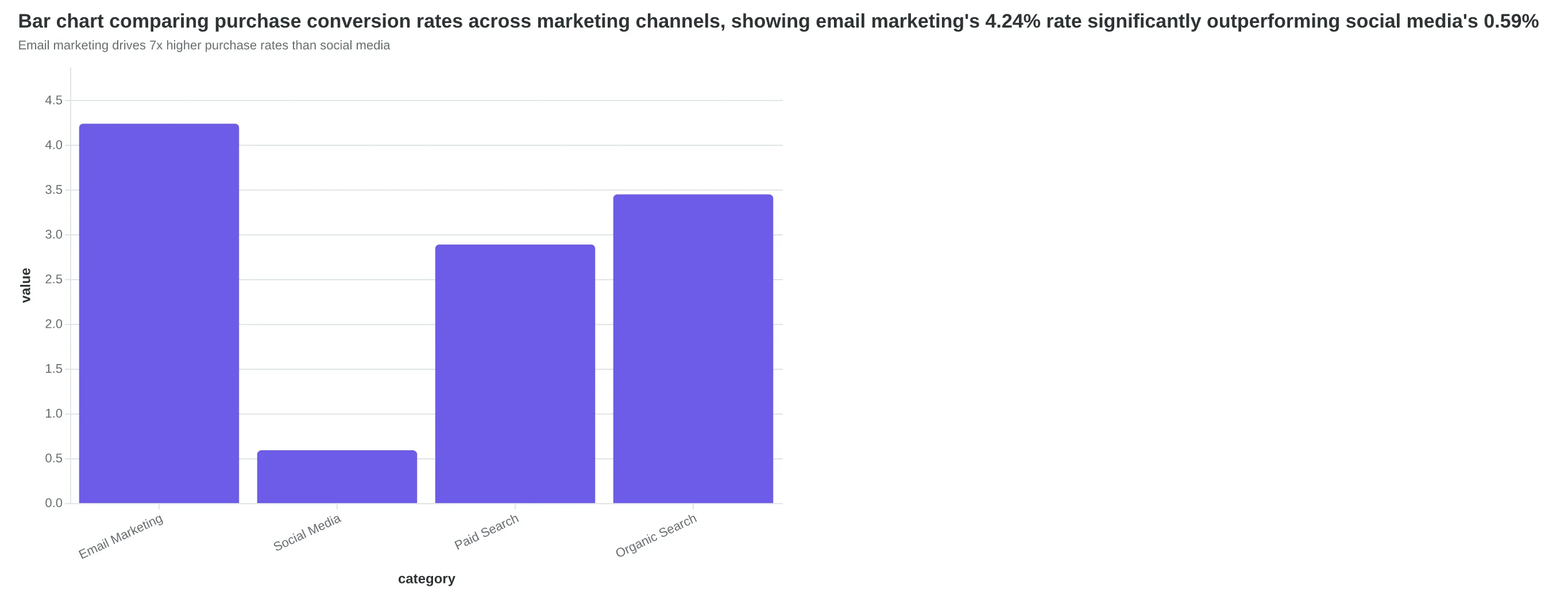
By day 90, email should drive 4.24% of your traffic to purchase—7x higher than social media's 0.59% conversion rate. Your six-flow system works around the clock, recovering revenue from every stage of the customer journey.
Your First Action Tomorrow
Log into your ESP and create your first abandoned cart email. Write to one real customer who left items behind yesterday. That personal connection scales to thousands of automatic recoveries.
The businesses crushing it with email didn't build Rome in a day—but they did start with cart abandonment in week one. Your customers are waiting.
“By day 90, email should drive 4.24% of your traffic to purchase—7x higher than social media's 0.59% conversion rate.”
| Phase | Weeks | Primary Flow | Success Metric | Revenue Impact |
|---|---|---|---|---|
| Foundation | 1-2 | Abandoned Cart | 15-20% recovery | Immediate ROI |
| Expansion | 3-4 | Browse Abandonment | 5-8% conversion | 97% audience capture |
| Retention | 5-8 | Post-Purchase | 25% open rate | 67% higher LTV |
| Acceleration | 9-12 | Recommendations + Win-back | 12% CTR | Long-term revenue |
| 90-day roadmap: from cart recovery to customer lifetime value optimization | ||||
Email marketing drives 7x higher purchase rates than social media
Sarah's transformation didn't happen overnight, but it followed a predictable pattern. Month one: she implemented the welcome sequence and recovered 23% more first-time buyers. Month two: she layered in cart abandonment emails and saved $47,000 in lost sales. By month six, all six flows were working together — welcome emails nurturing new subscribers, browse abandonment catching window shoppers, post-purchase sequences turning buyers into repeat customers.
The numbers tell the story: 340% increase in email revenue, 67% improvement in customer lifetime value, and a predictable $2.3 million annual revenue stream that runs itself. Sarah didn't just fix her email marketing — she built a revenue recovery system.
Your store has the same opportunity. Every abandoned cart, every first-time visitor, every repeat customer represents recoverable revenue sitting in your data. The six flows aren't separate campaigns — they're interconnected touchpoints that guide customers from browsers to buyers to brand advocates.
The framework is proven. The templates exist. Start with AlpacaRelay's scored e-commerce email templates — each flow pre-built and optimized for maximum revenue recovery. Pick your highest-priority flow, customize the first email, and watch your data transform from lost opportunities into predictable growth.
The question isn't whether email flows work. The question is how much revenue you're leaving on the table while you wait to implement them.
“The question isn't whether email flows work. The question is how much revenue you're leaving on the table while you wait to implement them.”
Before
- ✗Random promotional blasts
- ✗23% email open rates
- ✗Single purchase customers
- ✗$180 average order value
After
- ✓6-flow automated system
- ✓67% improvement in CLV
- ✓Repeat buyer nurturing
- ✓$2.3M annual email revenue
Sarah's transformation: from promotional emails to predictable revenue recovery system
Ready to Build Your Email Revenue Engine?
Start with the Foundation: Use our free Email Quality Scoring tool to benchmark your current abandoned cart emails. Most score below 70/100 — see where yours stands.
Get the Templates: Browse our complete e-commerce email template library featuring all six flows, pre-scored and optimized for maximum recovery rates.
Go Deeper: Download the complete E-Commerce Email Implementation Checklist with technical setup guides, campaign timelines, and success benchmarks for each flow.